R. G. Collingwood, 1889 -
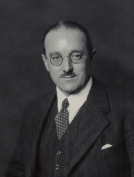 Robin George Collingwood was born on the 22nd February, 1889 at Cartmell Fell, Lancs (now Cumbria), the son of the artist and archaeologist W.G. Collingwood, who had been John Ruskin’s private secretary and his biographer and was a leading figure in the Cumberland and Westmorland Archaeological Society. R. G Collingwood grew up in what he described as ‘a gradually thickening archaeological atmosphere’ He was educated at Rugby School and at University College, Oxford, and became a fellow of Pembroke College in 1912 before his final examinations. He became Waynflete Professor of Metaphysical Philosophy at Magadalen college, Oxford from 1935 until his death at Coniston in 1943.
Whilst Collingwood is mainly remembered as a philosopher of history, he was an equally important early 20th century archaeologist, directing many excavations on Roman sites in the north of England, including important excavations at the Roman forts of Papcastle, Bainbridge, and most importantly Ambleside. His published work was extensive an influential, and includes Roman Britain (1923); The Archaeology of Roman Britain (1930); Roman Britain and the English Settlements (with J. N. L. Myers, 1936); and The Roman Inscriptions of Britain (edited by R. V. P. Wright, and published posthumously in 1965).
Perhaps his greatest contribution to archaeology comes from his insistence that excavations should not take place unless there is a question to be answered, and is now one of the basic presuppositions of archaeological theory.
