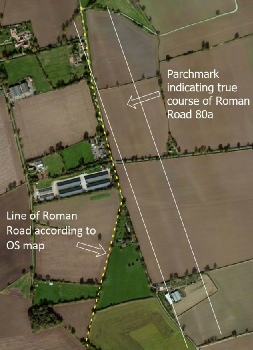
A soilmark, similar to a cropmark, is usually viewed from the air and studied using aerial photographs. They are traces of archaeological featires visible in ploughed or harrowed fields, often for very short period following ploughing. They usually form when traces of archaeological deposits are brought to the surface by ploughing or where the surrounding soil is becoming thin and eroded: if they are a different colour to the surrounding soil, a soilmark is formed, which could be darker or lighter than the soil depending on the nature of the deposits. Soilmarks can also form very soon after ploughing or harrowing if the weather is warm and dry, as the soil dries and areas containing greater amounts of solid material such as stone or gravel will dry out more quickly when they are often called parchmarks. This happens quite often with Roman roads because of the materials used in their construction.
See cropmark
Soilmark